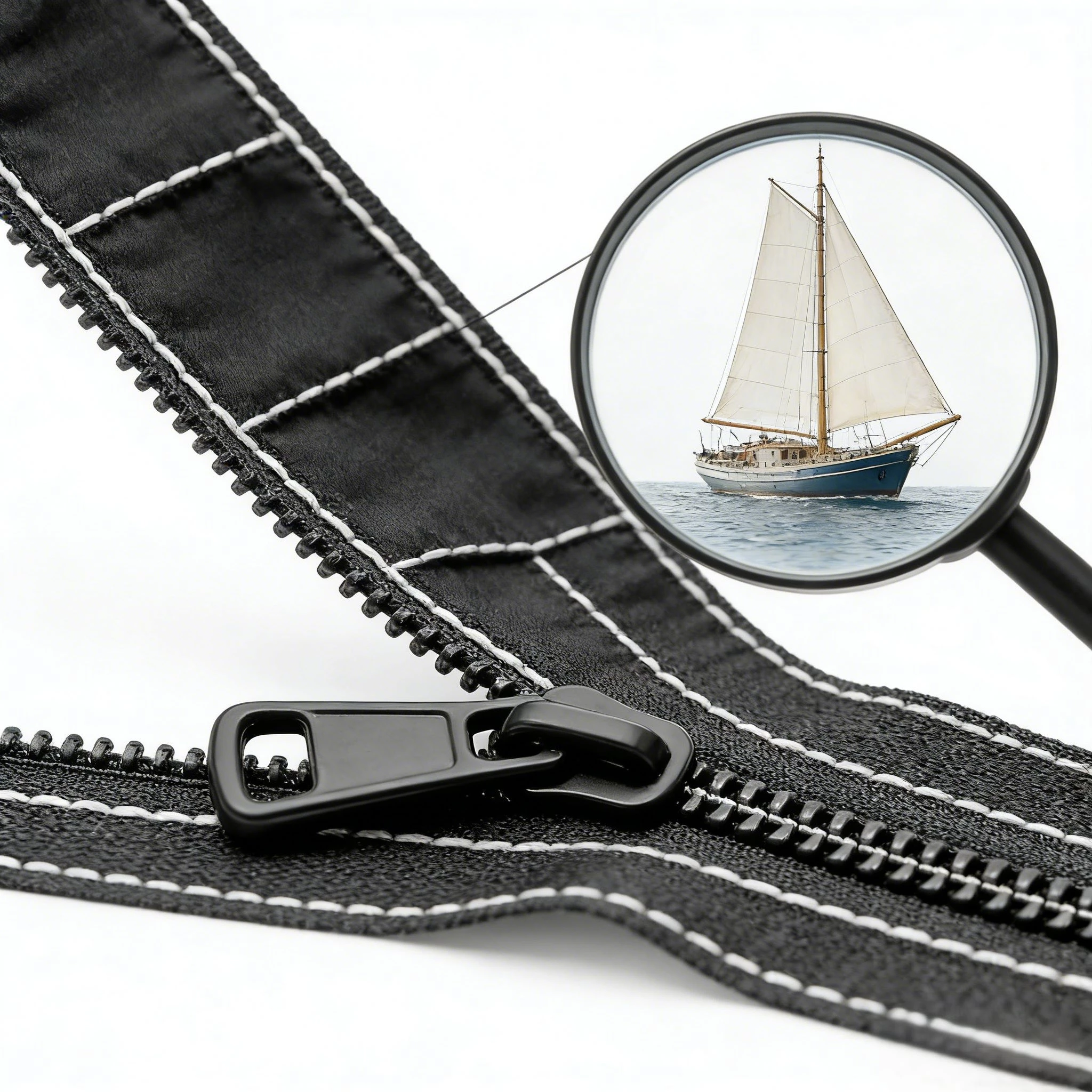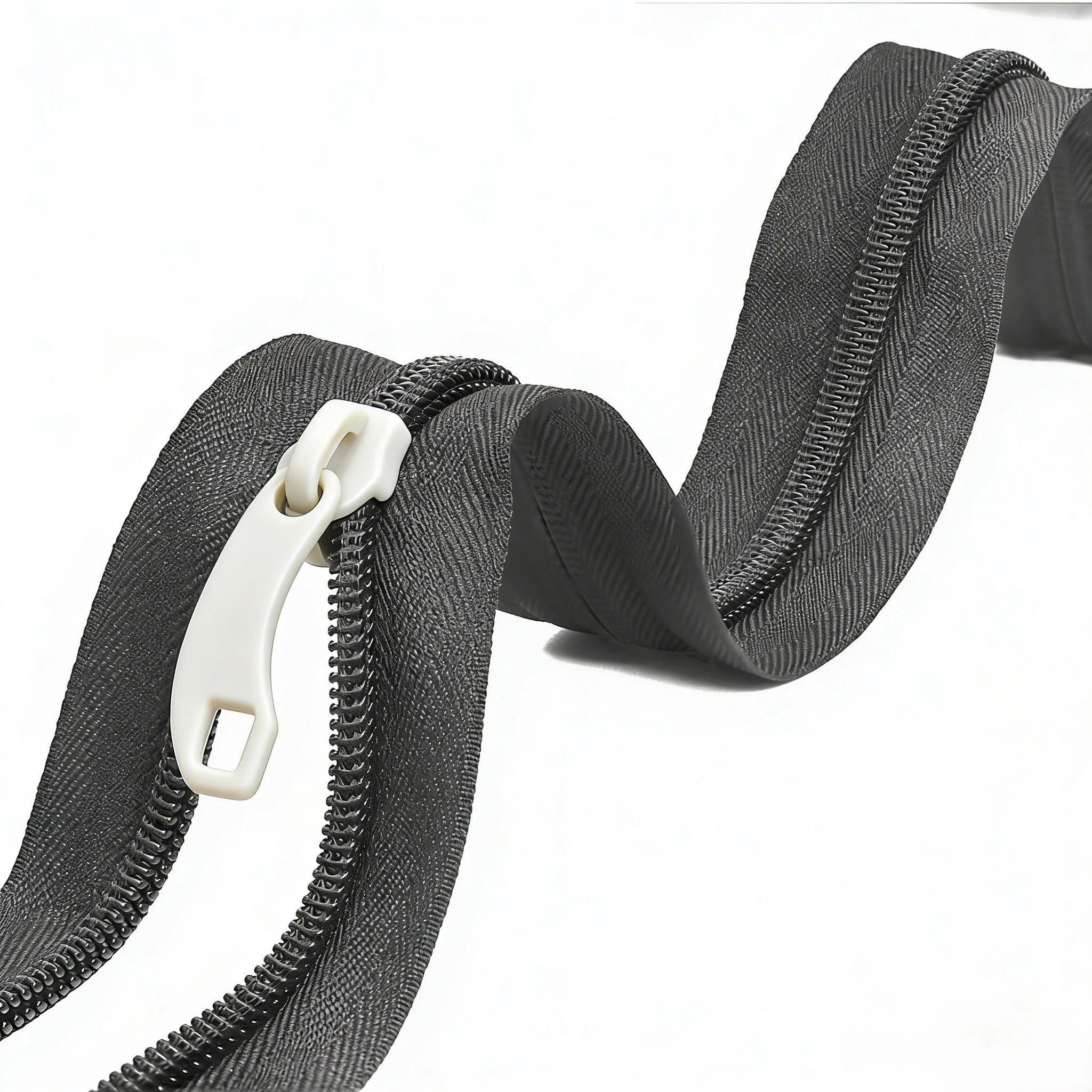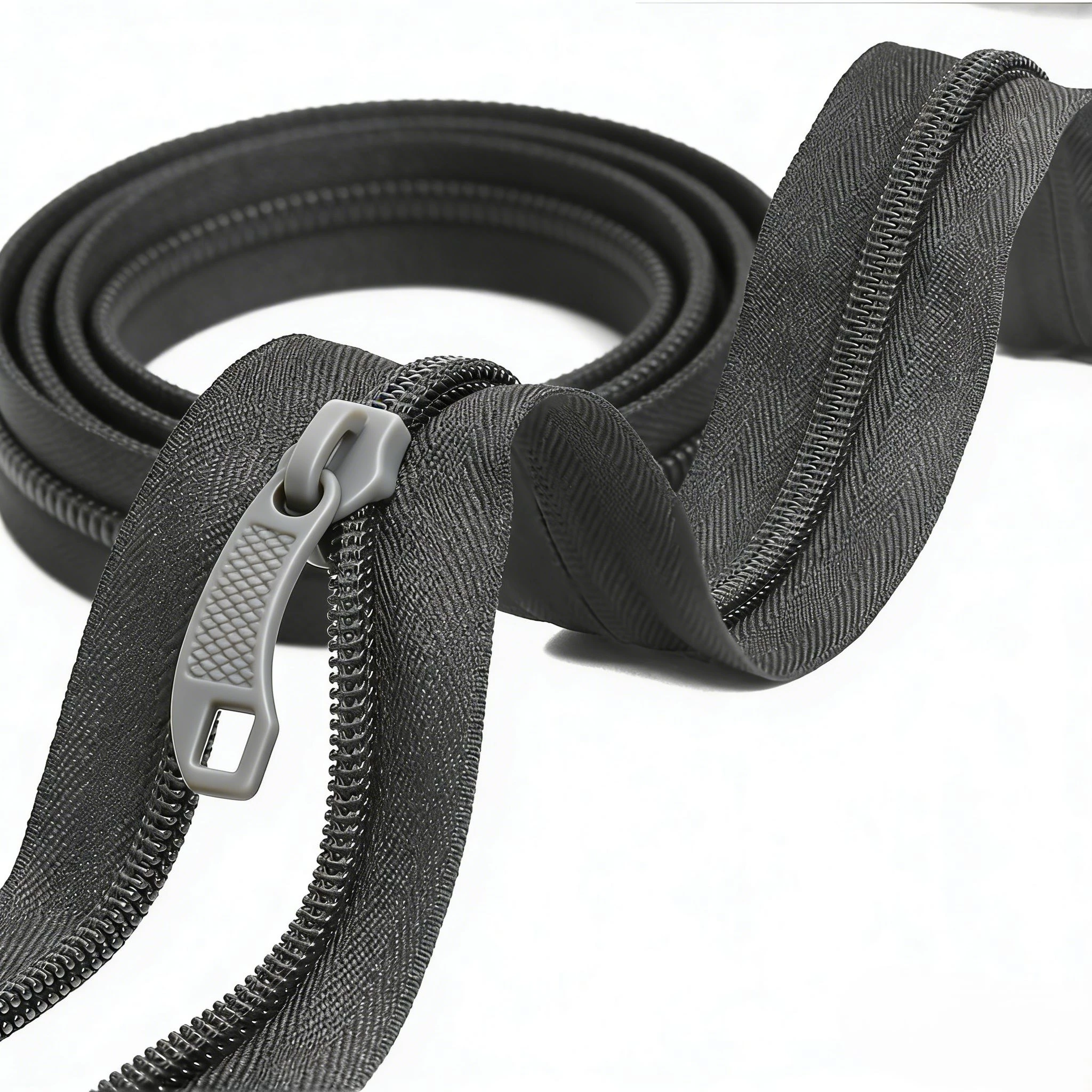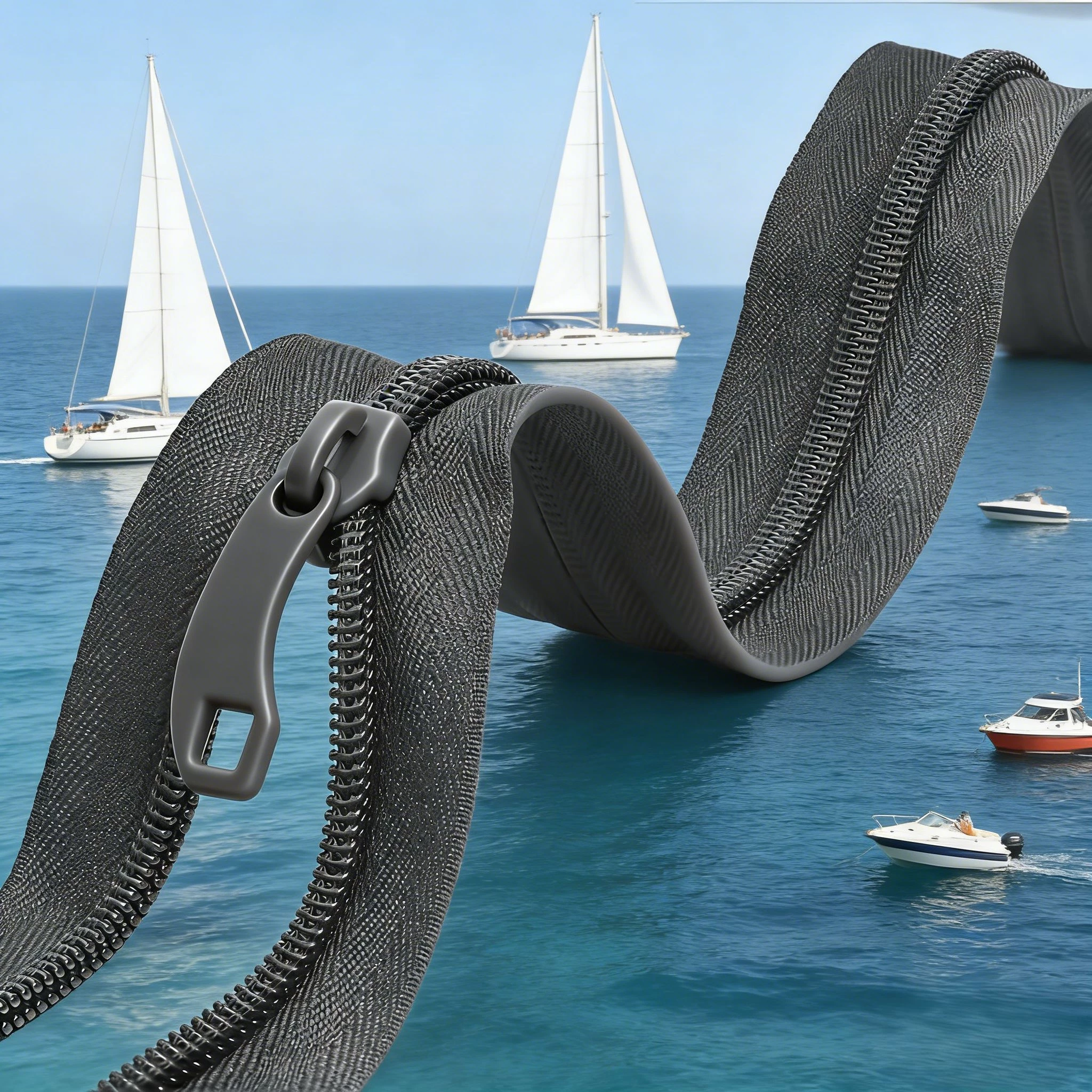

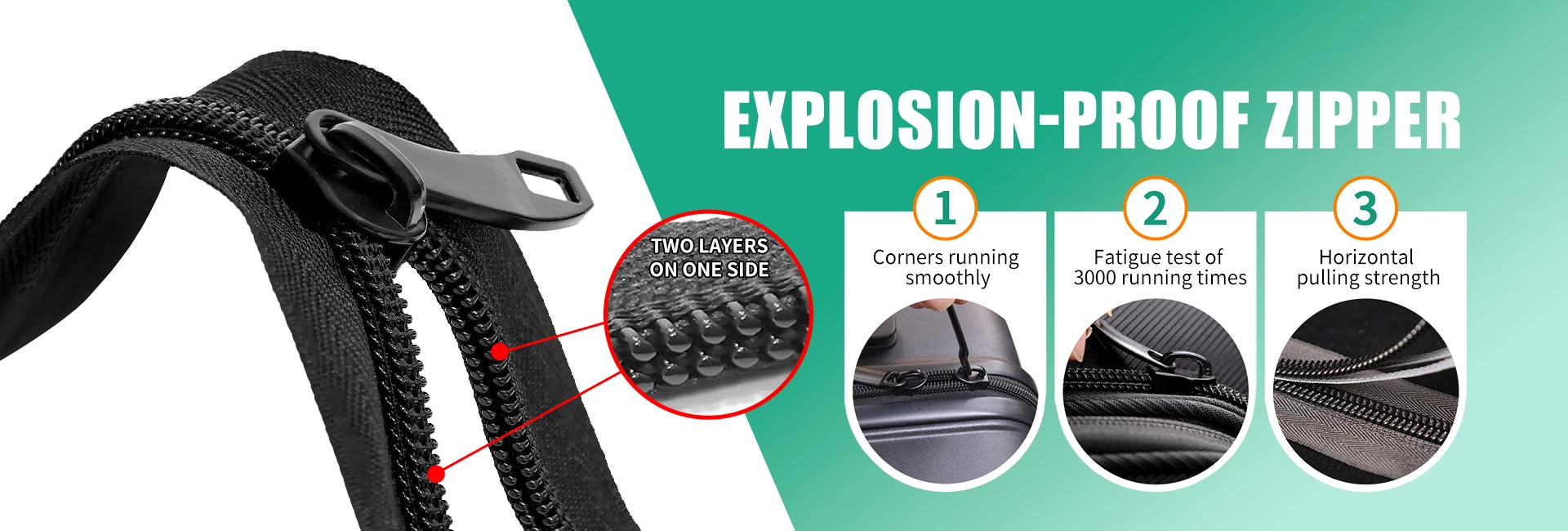

If you manufacture boat canvas, sail covers, or marine upholstery, you already know the frustration: a zipper bursts mid-season, your customer calls angry, and you're stuck with a warranty claim that eats into your margin. The root cause is almost always the same — the zipper was never designed for marine conditions.
Here are the 5 critical factors every canvas shop should evaluate before committing to a zipper supplier.
1. Anti-Burst Structure: Not All "Heavy-Duty" Zippers Are Equal
Standard zippers fail under lateral tension — the teeth separate when wind gusts hit the canvas. A true marine-grade anti-burst zipper uses reinforced nylon teeth with an engineered locking slider that prevents spontaneous opening. Ask your supplier: "What lateral pull force can your zipper withstand before bursting?" If they cannot quote a test value above 800N, walk away.
2. Material Resistance: Saltwater, UV, and Constant Moisture
Marine environments are brutal. Low-quality nylon teeth degrade under UV exposure within 6 months. Metal zippers corrode in saltwater. The right choice is high-density molded nylon teeth paired with high-tenacity polyester webbing — lightweight, rust-proof, and UV-resistant. Look for suppliers who can provide salt-spray test reports and UV aging data.
3. Sliding Smoothness Under Real Marine Conditions
A zipper that slides smoothly on your workbench may jam completely after exposure to sand, salt, and moisture. Precision-molded teeth with consistent spacing (±0.02mm tolerance) make the difference between a zipper that glides effortlessly and one that needs two hands to operate. This is especially critical for boat enclosure zippers that end-users operate daily.
4. Size Versatility and Customization
Different applications demand different zipper sizes: #5 for light spray hoods, #8 for bimini tops, #10 for heavy-duty full enclosures. Your supplier should offer the full size range plus custom lengths, colors, and slider finishes. OEM capability — including custom logo embossing on sliders — signals a factory that understands B2B procurement needs.
5. Consistent Quality Control: ISO Certification Matters
Batch-to-batch inconsistency is the hidden cost of cheap zippers. One bad batch means an entire production run of canvas covers gets recalled. Insist on ISO 9001 certified manufacturers with documented QC processes — raw material inspection, in-process testing, and final random sampling. A 10,000-cycle durability test report should be available on request.
The Bottom Line
Choosing the right marine-grade anti-burst zipper is not about finding the cheapest unit price — it is about eliminating the $500+ cost of a single warranty repair. Evaluate your supplier against these five factors, request samples for in-house testing, and make your decision based on documented performance data, not marketing claims.