

Choosing the wrong zipper material is the silent profit killer in hardware procurement. Order metal zippers for a beach bag and the salt air corrodes them within one season. Choose nylon for heavy-duty luggage and the teeth separate under load — triggering returns that cost far more than the zipper itself. This guide provides a side-by-side technical comparison of nylon coil, metal, and plastic (resin) zippers — helping B2B buyers match the right material to their product's actual performance requirements before placing a purchase order.
The Three Zipper Materials at a Glance
Every zipper consists of two core components: the teeth (chain) and the tape (webbing). While tape material (polyester, cotton, nylon) is largely standardized across zipper types, the teeth material determines performance, durability, appearance, and cost. Three materials dominate global zipper production:
🔄 Nylon Coil
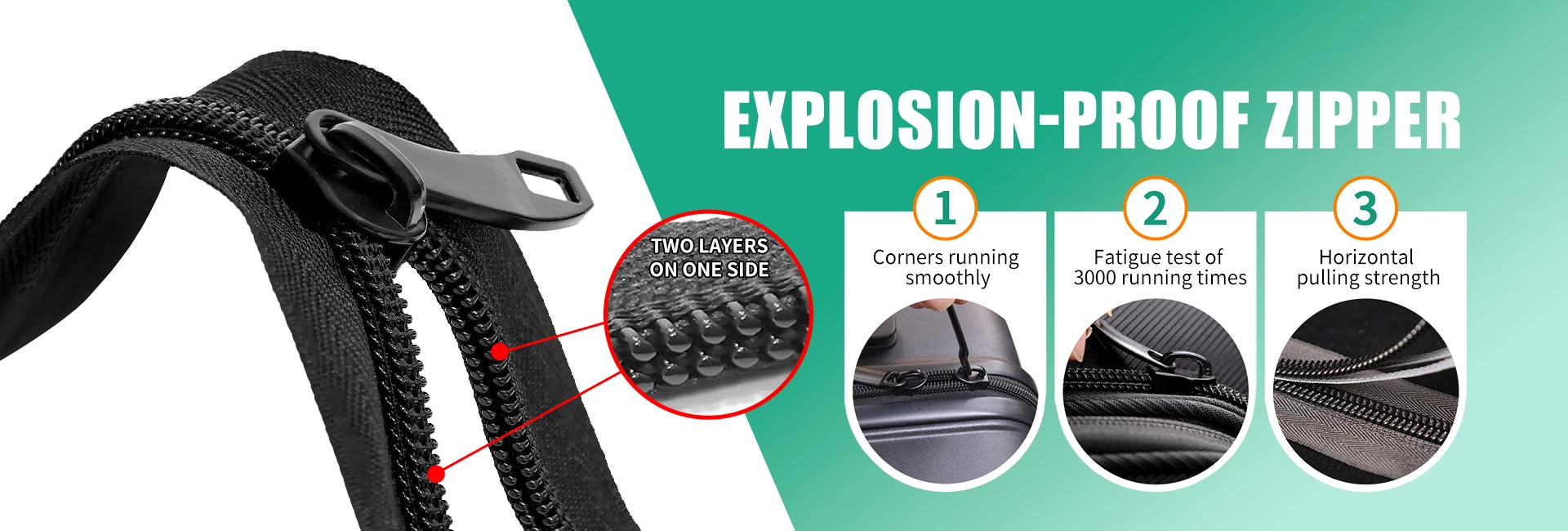
Continuous spiral of nylon monofilament stitched onto tape. Lightweight, flexible, self-healing. The most widely used zipper type globally for mid-weight applications.
🔩 Metal
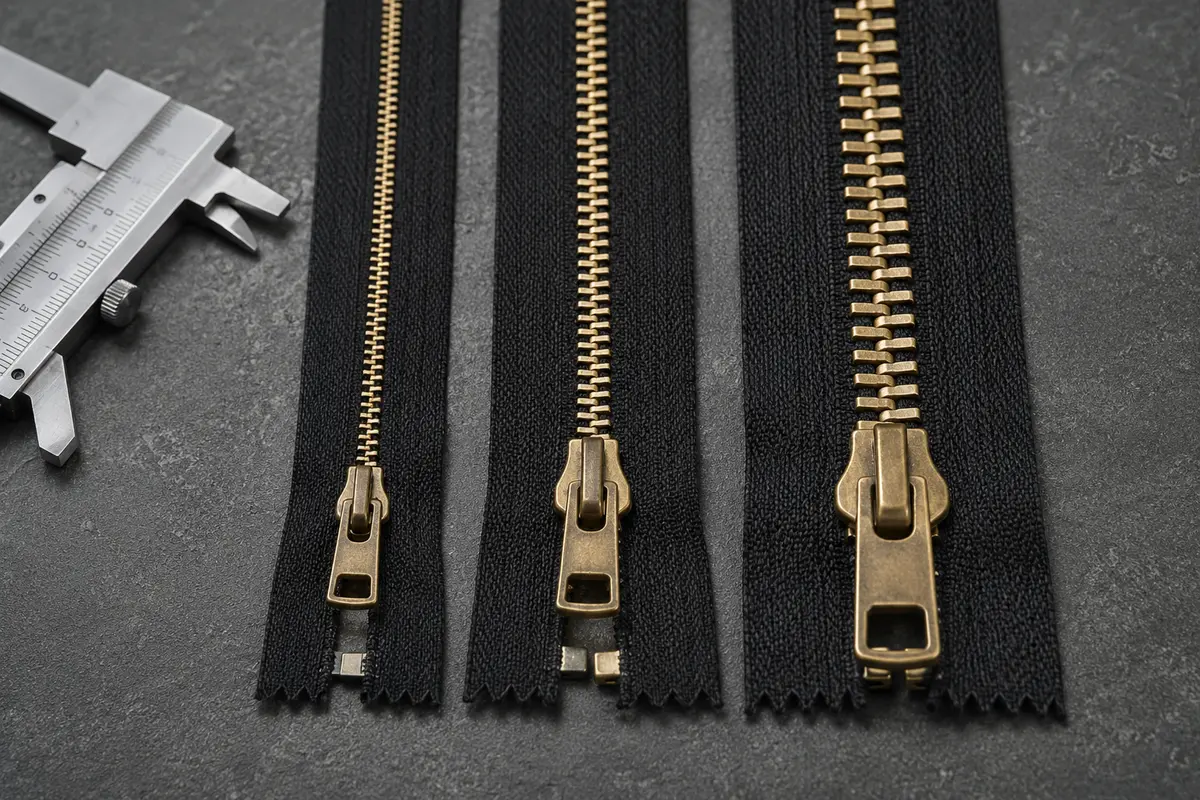
Individual metal teeth (brass, aluminum, zinc alloy) clamped onto tape. Maximum strength, premium appearance, distinct tactile feedback. The choice for jeans, luggage, and luxury goods.
🧩 Plastic / Resin (POM)
Injection-molded POM (polyoxymethylene) teeth fused to tape. Good strength-to-weight ratio, vibrant color options, cost-effective for bulk production.
Head-to-Head Comparison: 7 Buying Factors
| Factor | Nylon Coil | Metal | Plastic / Resin |
|---|---|---|---|
| Strength | ★★★☆☆ | ★★★★★ | ★★★★☆ |
| Weight | Lightest ✓ | Heaviest ✗ | Light ✓ |
| Corrosion Resistance | Excellent ✓ | Depends on plating | Excellent ✓ |
| Cost (per meter) | $0.05–0.15 | $0.15–0.60 | $0.08–0.25 |
| UV Resistance | Moderate | High | Low (brittle) |
| Color Options | Wide range ✓ | Limited by plating | Unlimited (POM dye) ✓ |
| Best Applications | Jackets, bags, tents, outdoor | Jeans, luggage, luxury, heavy-duty | Sportswear, luggage, marine, outdoor |
1. Nylon Coil Zippers — The Versatile Workhorse
Nylon coil zippers account for approximately 65% of global zipper production. The teeth are formed from a single continuous nylon monofilament wound into a spiral and stitched to the zipper tape. This construction gives nylon coil zippers a unique advantage: self-healing. If one loop of the coil deforms under stress, the adjacent loops maintain closure.
When to Choose Nylon Coil
- Lightweight applications: Jackets, dresses, handbags, backpacks under 20L — where metal's weight would affect garment drape or bag handling.
- Curved seams: Nylon coil bends smoothly around corners without jamming, making it ideal for bag gussets and contoured garments.
- Water-resistant products: Nylon can be paired with PU or TPU-coated tape for water-resistant zippers (common in rain jackets and outdoor gear).
- High-volume, cost-sensitive orders: At $0.05–0.15 per meter, nylon coil offers the lowest unit cost of all three types.
Limitations to Watch For
- Crosswise (lateral) strength is lower than metal — a #5 nylon zipper withstands ~350–400N vs ~500–600N for #5 metal.
- Nylon monofilament degrades under prolonged UV exposure — not ideal for permanent outdoor installations without UV-stabilized additives.
- Cannot achieve the premium metallic look that high-end fashion brands demand.
2. Metal Zippers — Strength and Premium Aesthetics
Metal zippers use individual teeth stamped from metal sheets or cast from alloys, then clamped onto the tape edge at precise intervals. The three dominant metals are brass (golden tone, premium), aluminum (silver, lightweight), and zinc alloy (die-cast, most common for sliders). Electroplating adds finish options like nickel, gunmetal, and antique brass.
When to Choose Metal
- High-stress applications: Jeans fly fronts, heavy luggage, industrial tool bags — anywhere the zipper must remain closed under lateral tension.
- Premium aesthetics: Luxury handbags, leather goods, heritage denim — where visible zipper hardware contributes to brand perception and justified higher retail pricing.
- High-temperature environments: Metal zippers withstand heat that would deform nylon or plastic — relevant for fire-resistant gear and industrial uniforms.
- Products where tactile feedback matters: The distinct "click" of metal teeth conveys durability to end users.
Limitations to Watch For
- Weight: metal zippers are 2–3x heavier than nylon equivalents — significant for lightweight garments and ultra-light outdoor gear.
- Corrosion risk: Untreated aluminum and zinc alloy corrode in saltwater or high-humidity environments. Always specify nickel-plated brass or stainless steel for marine/coastal applications.
- Cost: Metal zippers cost 2–4x more than nylon coil, impacting margins on price-sensitive product lines.
3. Plastic / Resin Zippers — The Best of Both Worlds?
Plastic zippers use injection-molded POM (polyoxymethylene, also called acetal or Delrin) teeth that are molded directly onto the tape in a single manufacturing step. This creates a permanent bond between teeth and tape — unlike metal, where teeth are mechanically clamped and can theoretically detach.
When to Choose Plastic / Resin
- Color-critical products: POM accepts pigment during injection molding, allowing literally any Pantone-matched color. This is impossible with metal (limited to plating colors) and difficult with nylon (dyeing limitations).
- Marine and outdoor gear: POM is naturally corrosion-proof and available in UV-stabilized grades. Large #8 and #10 resin zippers dominate the marine canvas and boat cover market.
- Sportswear and activewear: Resin zippers are lighter than metal but stronger than nylon — the sweet spot for performance apparel that needs durability without weight penalty.
- Medium to heavy luggage: Many mid-range and premium luggage brands use #8 or #10 resin zippers for the main compartment — they offer near-metal strength at lower weight and cost.
Limitations to Watch For
- Low-temperature brittleness: Standard POM becomes brittle below -20°C — specify low-temperature POM grades for cold-climate products.
- Not as strong as metal at maximum gauge: A #10 resin zipper approaches but does not equal the strength of a #10 brass zipper.
- UV degradation: Standard POM degrades under prolonged direct sunlight — UV-stabilized grades add cost but are essential for outdoor products.
Decision Framework: How to Choose in 3 Steps
Step 1: Identify the Primary Constraint
Ask: "What will cause this zipper to fail first?"
- Lateral tension / bursting → Metal (highest crosswise strength)
- Corrosion from environment → Nylon or Resin (naturally corrosion-proof)
- UV exposure → Metal (or UV-stabilized Nylon/Resin with premium upcharge)
- Weight sensitivity → Nylon (lightest option)
Step 2: Match Material to Product Category
| Garments (dresses, blouses) | Nylon #3 or #5 |
| Jackets, coats, hoodies | Nylon #5 or Metal #5 (premium) |
| Jeans, denim | Metal #5 (industry standard) |
| Handbags, fashion bags | Nylon #5 or Metal #5 (brass/nickel) |
| Luggage, suitcases | Resin #8/#10 or Metal #7/#8 |
| Backpacks, daypacks | Nylon #5 or Resin #5/#7 |
| Tents, outdoor shelters | Nylon #5/#7 or Resin #7/#8 (UV) |
| Boat canvas, marine covers | Resin #8/#10 (UV-stabilized) or Nylon #10 |
| Industrial equipment cases | Metal #10 or Resin #10 |
Step 3: Calculate Total Cost of Ownership (TCO)
Don't compare unit prices alone. The cheapest zipper that fails after 3 months is more expensive than a premium zipper that lasts 3 years. Factor in:
- Warranty return rate: Even a 1% increase in zipper-related returns on a 50,000-unit order equals 500 returned products.
- Brand reputation cost: A broken zipper on a $200 bag generates negative reviews that cost far more than the $0.30 saved on cheap hardware.
- Production efficiency: Some materials feed through automated sewing machines better than others — nylon coil is generally the most machine-friendly.
⚡ Pro Tip: For products that need both strength AND lightweight design, consider hybrid approaches: use metal zippers on the main compartment (visible, high-stress) and nylon coil on internal pockets (hidden, low-stress). This balances performance, weight, and cost.
Quality Standards by Material Type
When requesting samples or placing orders, reference the appropriate testing standards:
| Material | Chinese Standard | International Reference | Key Test |
|---|---|---|---|
| Metal Zippers | QB/T 2171 | BS 3084 / ASTM D2061 | Crosswise strength, pull tab torque |
| Nylon Coil Zippers | QB/T 2172 | BS 3084 / ASTM D2061 | Top stop strength, slider locking force |
| Plastic/Resin Zippers | QB/T 2173 | BS 3084 / ASTM D2061 | Tooth retention, cold crack (-20°C) |
Common Sourcing Mistakes by Material
- Assuming all nylon zippers are the same. Nylon coil quality varies dramatically by monofilament diameter, coil density (loops per inch), and stitch tension. Cheap nylon zippers use thinner filament and looser stitching — they fail under load that quality nylon handles easily.
- Specifying metal without specifying plating. "Metal zipper" is not a complete specification. Raw zinc alloy corrodes; brass tarnishes unevenly. Always specify the base metal + plating finish + salt spray test hours.
- Using standard POM for outdoor products. Standard acetal resin becomes brittle under UV after 6–12 months of sun exposure. UV-stabilized POM grades cost ~15–20% more but eliminate this failure mode entirely.
- Matching tape material to the wrong fabric. A polyester tape on a cotton garment will shrink differently after washing, causing puckering. For natural fiber garments, specify cotton or cotton-blend tape.
Need Help Selecting the Right Zipper Material?
Browse our complete zipper catalog organized by material type — nylon coil, metal, and plastic/resin — with detailed technical specifications for each. Request free samples to test in your own production environment before committing to bulk orders.
Browse Zippers by Material →