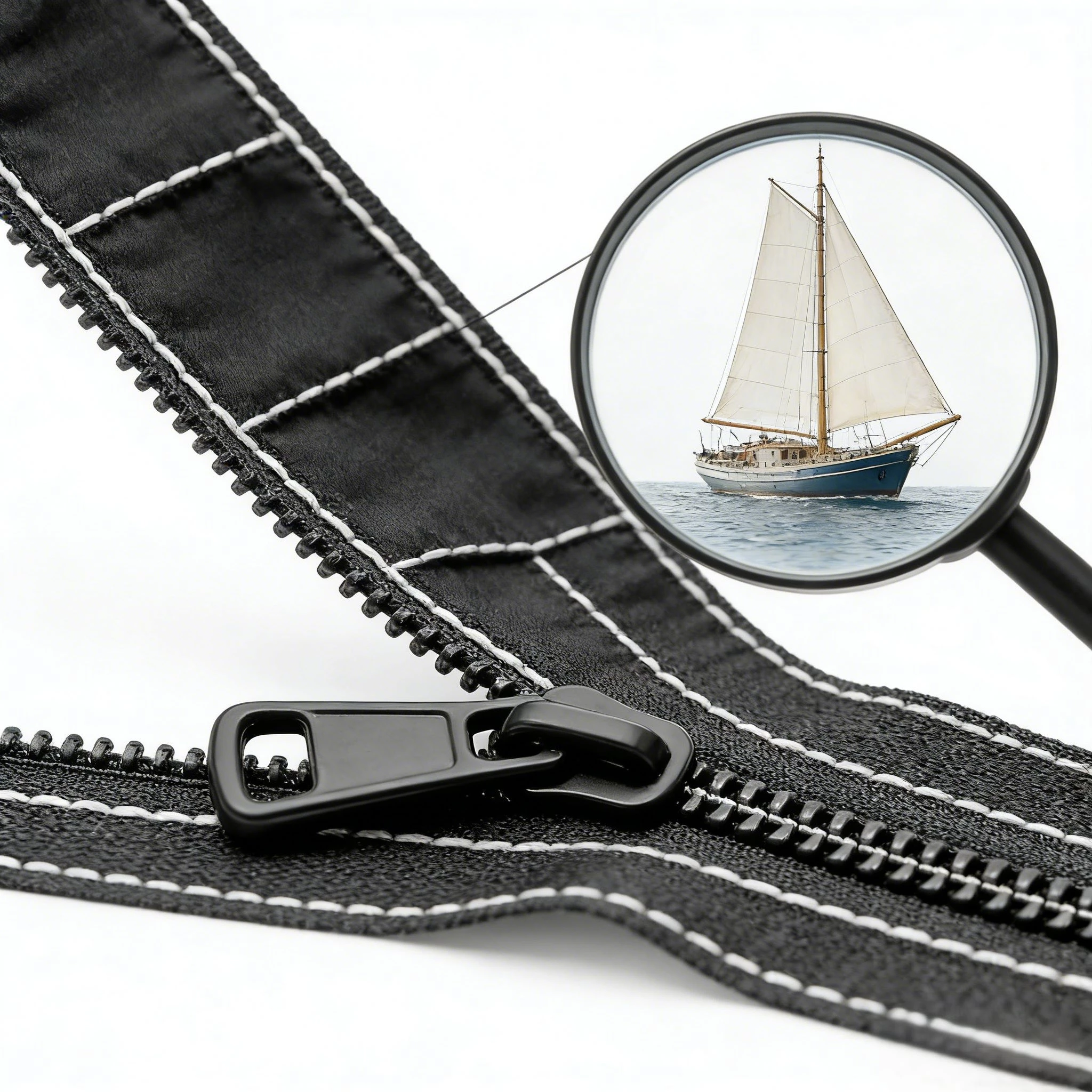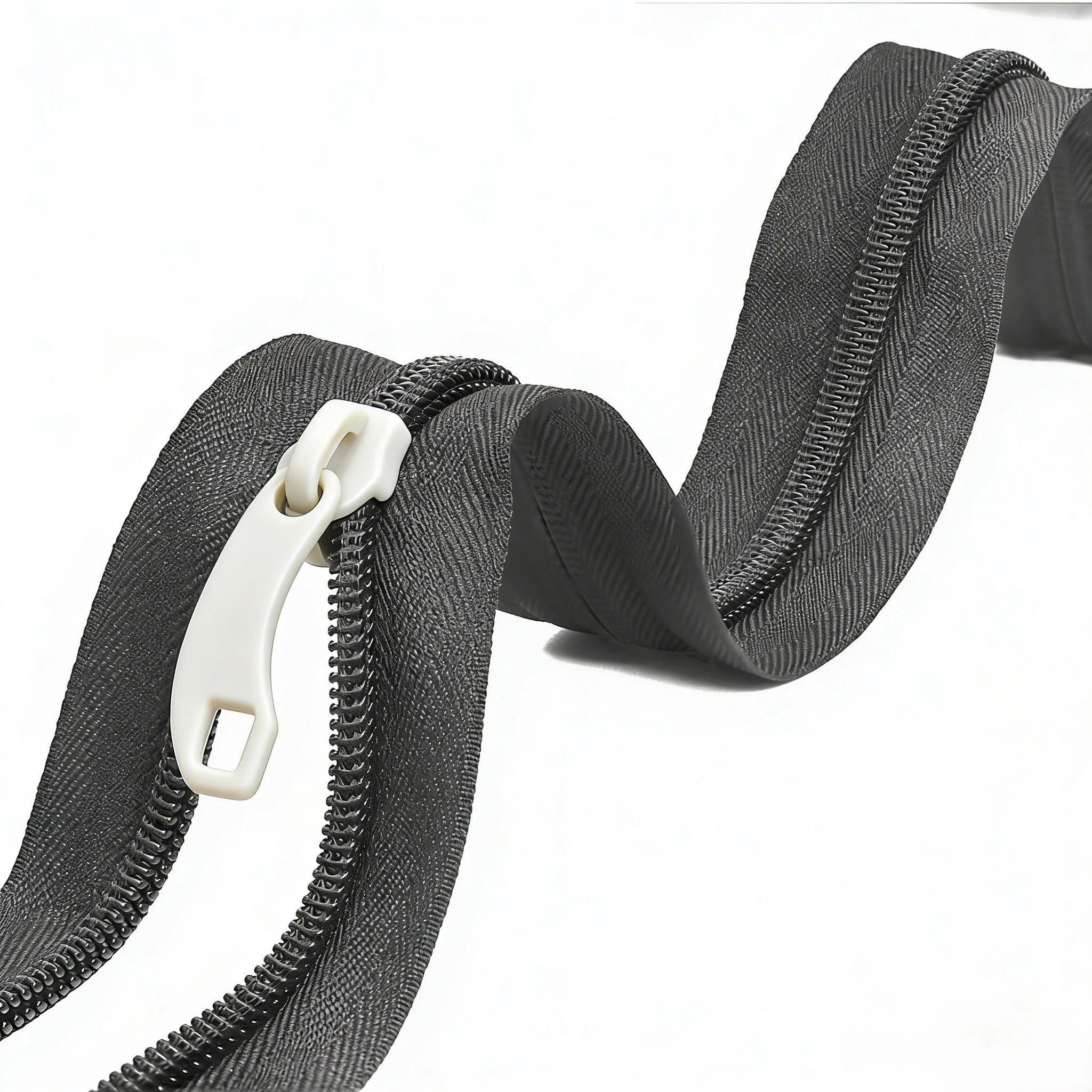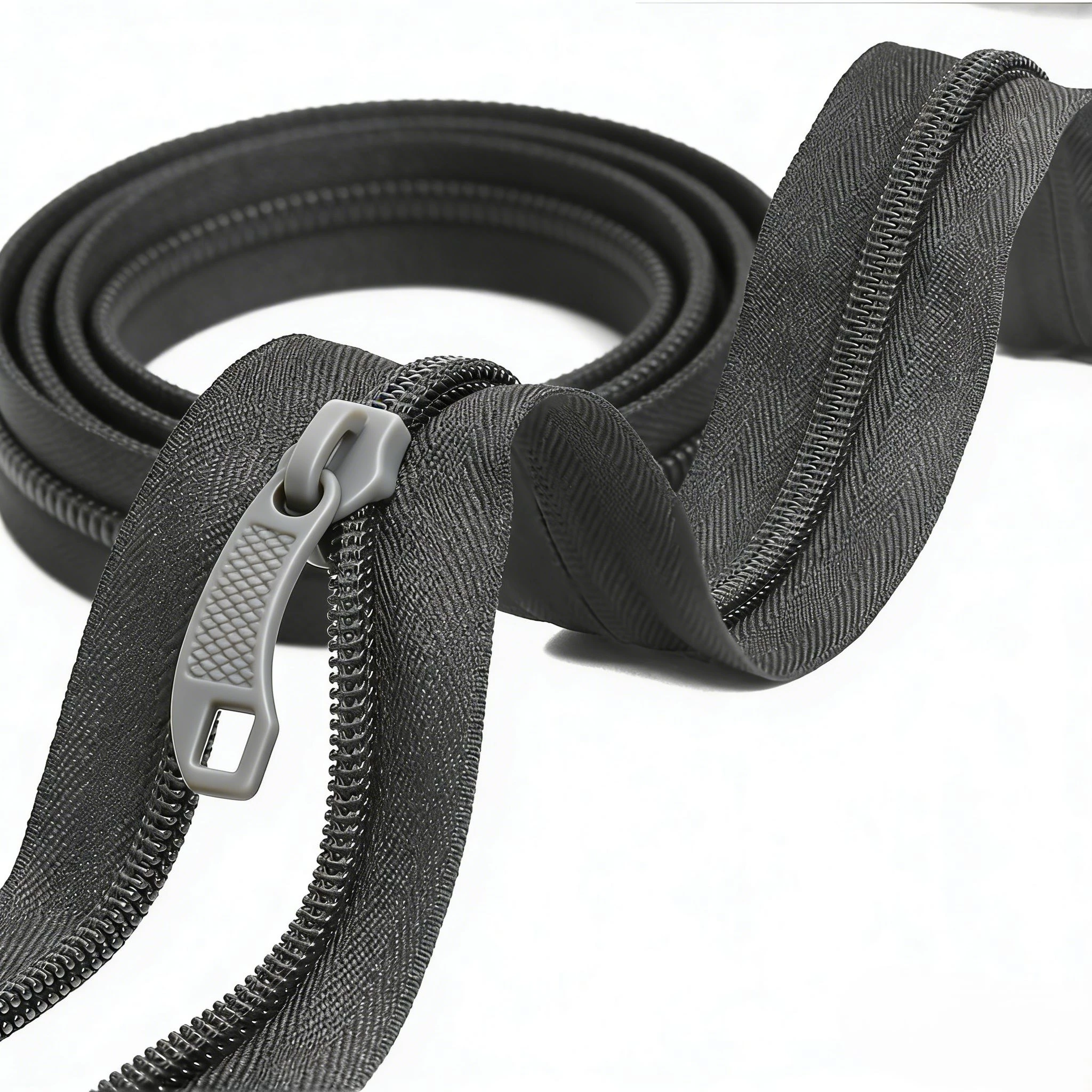

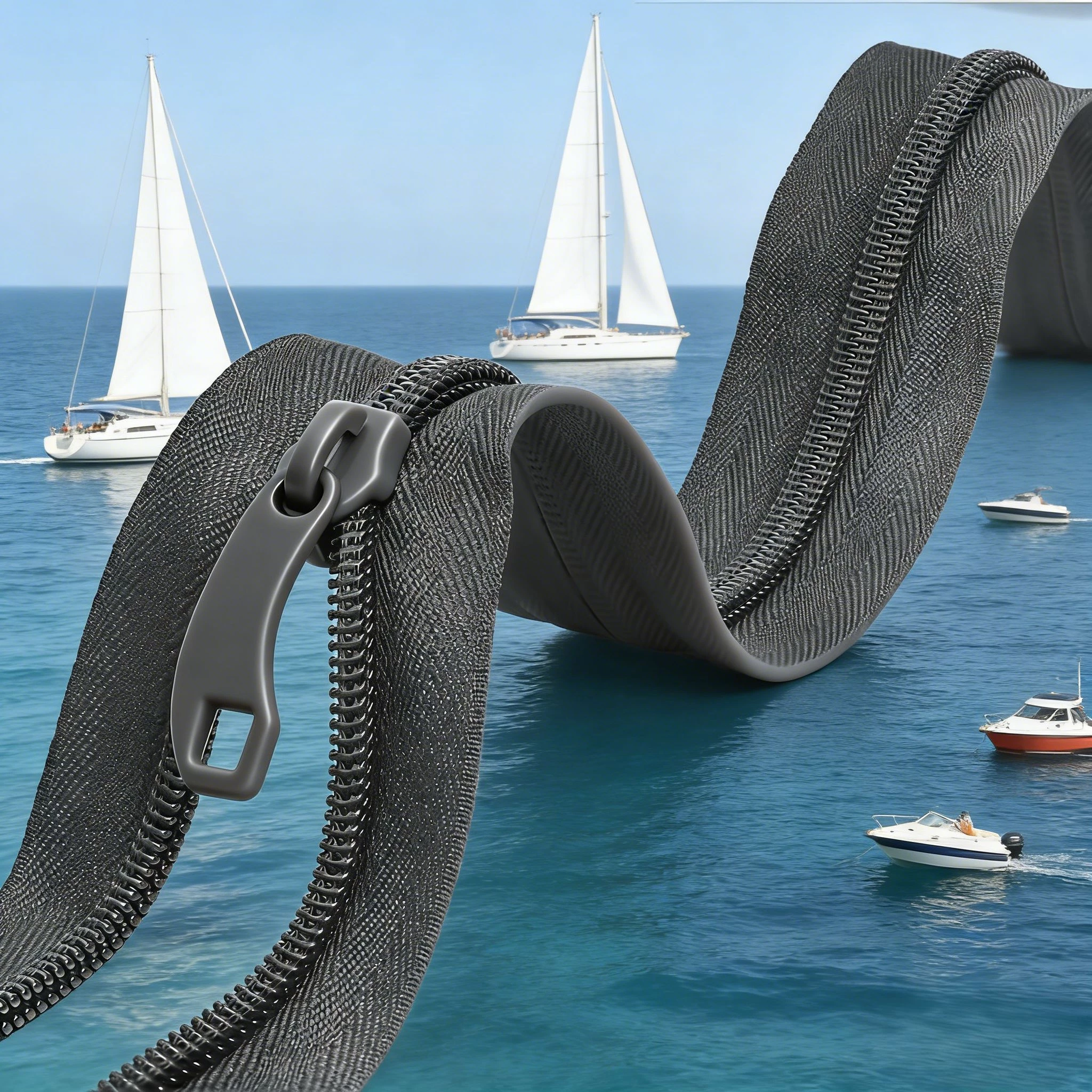
If you manufacture or repair boat canvas, sail covers, and marine enclosures, you already know this: standard zippers fail at sea. They burst under wind tension, corrode from salt spray, and jam with sand and moisture. Every failed zipper means an unhappy customer, a warranty claim, or worse—a safety hazard on the water.
This guide breaks down five critical factors to evaluate before placing your next order, so you can source zippers that actually hold up in a marine environment.
Factor #1: Burst Resistance — Does It Actually Stay Closed Under Load?
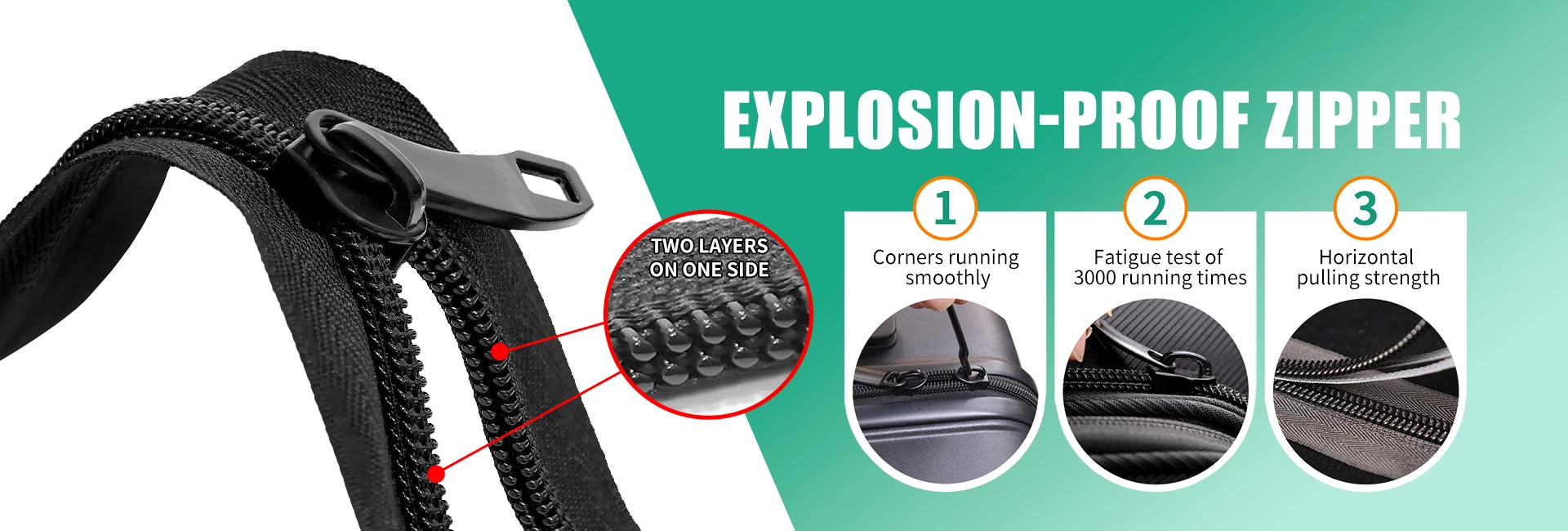
The number one failure mode for marine zippers is chain separation under tension. When wind gusts hit a boat cover, the fabric pulls hard on the zipper. If the teeth are not strong enough—or the slider doesn't lock properly—the zipper bursts open.
What to look for:
- Reinforced anti-explosion structure — the slider must have an enhanced locking pin that prevents the zipper from separating even when pulled hard from both sides.
- High-density molded nylon teeth — not standard coil or metal. Marine-grade nylon teeth offer a unique combination of high tensile strength and corrosion resistance. Look for zippers tested to withstand 10,000+ open/close cycles without tooth deformation.
- Polyester webbing tape — high-tenacity polyester resists UV degradation and doesn't stretch or shrink when wet, keeping the zipper chain stable under load.
Key question to ask your supplier: "What tensile strength test does this zipper pass, and can you provide the test report?"
Factor #2: Material Chemistry — Nylon vs. Metal vs. Plastic for Saltwater Exposure
This is where many buyers make the wrong call. Each material has trade-offs:
| Material | Saltwater Resistance | Strength | Best For |
|---|---|---|---|
| High-Strength Nylon | ✅ Excellent — naturally corrosion-proof | Very high (molded teeth) | Boat canvas, sail covers, outdoor marine |
| Metal (Brass/Nickel) | ⚠️ Medium — requires plating, can tarnish | Very high | Indoor upholstery, bags, garments |
| Plastic (POM/Vislon) | ✅ Good — won't rust | Moderate | Light-duty marine, luggage, outdoor gear |
The takeaway: For marine canvas that faces wind, salt, and UV simultaneously, high-density molded nylon teeth on polyester tape consistently outperforms both metal (which corrodes) and standard plastic (which can deform under high heat and tension).
Factor #3: Sizing Precision — #5, #7, #8, #10: Which One Do You Actually Need?
Zipper size directly affects strength and application suitability. Here's a practical guide:
#5 — Light Duty
Cushion covers, light spray hoods, interior marine curtains. Not for load-bearing canvas.
#7 — Medium Duty
Bimini tops, dodgers, sail covers on smaller vessels under 30 ft. Most common marine size.
#8 / #10 — Heavy Duty
Full boat covers, yacht enclosures, commercial marine canvas, hatch covers. Maximum burst resistance.
Pro tip: If you're unsure, go one size up. The cost difference is minimal, but the durability improvement can mean the difference between a 3-season zipper and one that lasts 5+ years. Also confirm your supplier can provide custom lengths—pre-cut zippers in standard lengths rarely match your exact canvas dimensions.
Factor #4: Quality Standards — Don't Take "Marine Grade" at Face Value
"Marine grade" is a marketing term—not a certification. The difference between a zipper labeled "marine grade" and one that actually survives at sea comes down to verifiable testing.
Minimum checks before ordering:
- ISO 9001 certification — confirms the manufacturer follows a documented quality management system, not just ad-hoc inspection.
- Tensile / anti-burst test data — request the actual test report showing the zipper's failure point under transverse (cross-chain) tension.
- Salt spray / UV aging test — the zipper should be tested under conditions that simulate marine exposure (saltwater immersion, UV lamp aging, humidity cycling).
- Slider locking test — the auto-lock mechanism should engage reliably after thousands of cycles. A 5-in-1 slider (base, cap, spring, pin, pull tab) provides stronger locking than a standard 3-piece design.
Red flag: If a supplier cannot produce test reports or only sends you a glossy brochure with no technical data, dig deeper. Quality marine canvas makers invest in third-party lab testing—and their zipper supplier should too.
Factor #5: Customization & Lead Time — Will Your Supplier Grow With You?
Your zipper requirements today may not match your needs six months from now. A good supplier relationship should offer:
Custom Lengths & Colors
Standard off-the-shelf lengths rarely align with your canvas patterns. Confirm your supplier can produce zippers to your exact specifications—length, color, slider finish.
Slider Compatibility
Different applications need different sliders—auto-lock, non-lock, YG-type. A supplier offering a full range of slider types can serve all your product lines from one source.
Realistic Lead Times
Stock sizes: 7–15 days. Custom sizes/colors: 20–30 days. If a supplier promises custom zippers in under a week without an existing order history, verify their capacity before committing.
The Bottom Line: A Simple Checklist for Your Next Order
- Spec the material correctly: High-density nylon teeth + polyester tape for saltwater/UV environments.
- Choose the right size: #7 for most canvas, #8/#10 for heavy-duty or commercial marine applications.
- Verify anti-burst design: Reinforced slider with locking mechanism—don't settle for standard sliders.
- Request test reports: Tensile, salt spray, UV aging, and cycle durability—not marketing copy.
- Confirm customization options: Lengths, colors, slider types, OEM branding—before you need them.
By evaluating your supplier against these five factors rather than just comparing unit prices, you'll source zippers that perform reliably season after season—which keeps your customers coming back and your warranty costs down.
For a deeper look at marine-grade zipper specifications and testing data, explore our full product specification sheet or request a sample for in-house evaluation.