
When sourcing metal zippers in bulk, appearance alone is never enough. A zipper that looks flawless on day one can fail after 500 cycles—or corrode within weeks of ocean freight. Smart B2B buyers don't gamble on quality. They test it before money leaves the bank. Here are the 8 inspection methods that separate reliable suppliers from risky ones.
1. Tensile Strength Test (ISO 13934 / ASTM D5034)
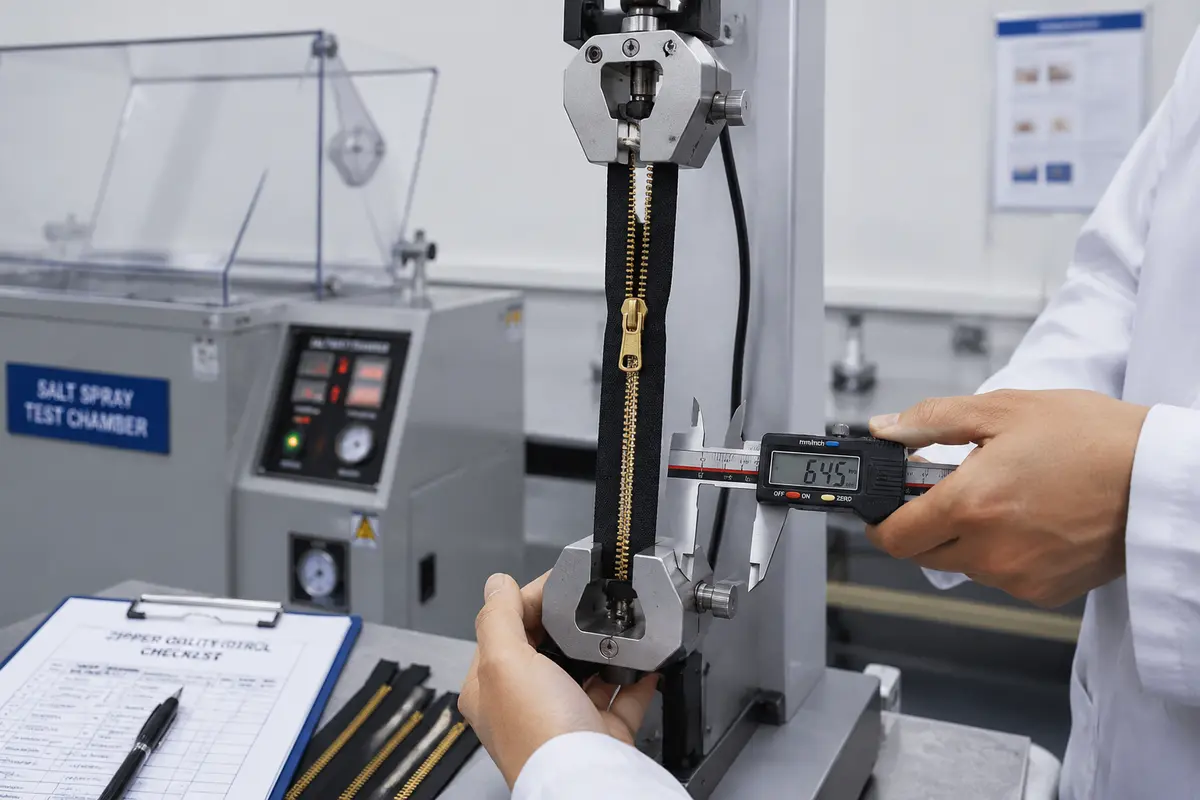
This is the single most revealing test for metal zippers. A universal testing machine grips both sides of the closed zipper and pulls laterally until failure. What you're measuring: crosswise strength—the force required to burst the zipper apart at the teeth.
| Minimum Requirement | ≥ 500N for #5, ≥ 700N for #8 metal zippers |
| Standard | QB/T 2171–2173 (China), BS 3084 (UK), ASTM D2061 |
| Red Flag | Zipper fails below 350N—reject the batch |
Pro tip: always ask the factory to send you their latest tensile test report with timestamped charts—not a generic certificate from 3 years ago.
2. Salt Spray Corrosion Test (ASTM B117)
Metal zippers face humidity, rain, sweat, and saltwater. The salt spray test accelerates corrosion in a controlled chamber—5% NaCl mist at 35°C. This is non-negotiable for marine-grade and outdoor zippers.
| Indoor Use (Garments/Bags) | ≥ 24 hours |
| Outdoor / Marine Use | ≥ 96 hours (some spec to 200h+) |
| Watch For | White rust (zinc corrosion) appearing within first 12 hours |
3. Slider Pull-Off Strength Test
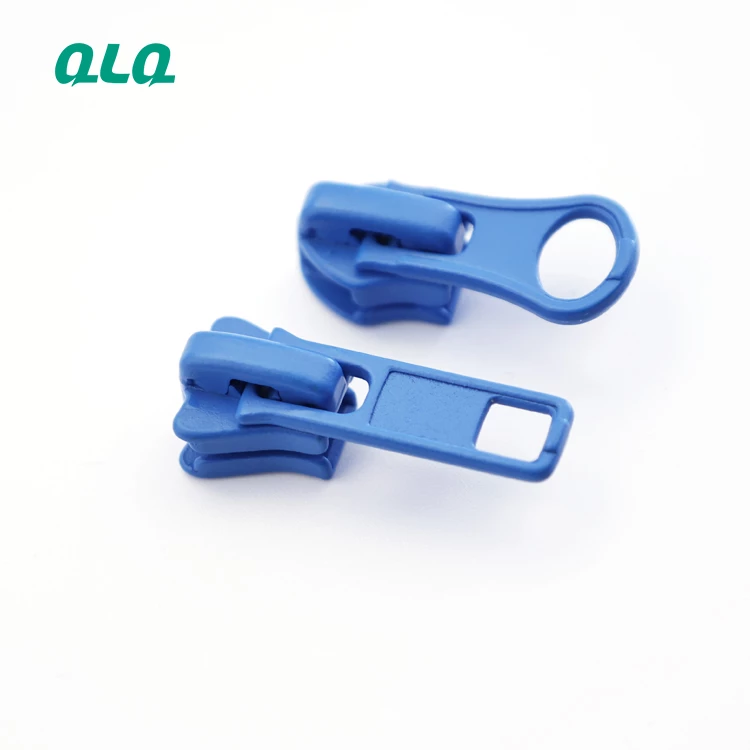
The slider body must withstand both vertical pull (pulling the pull tab up) and lateral twist without deforming or popping off the chain. Testing involves a fixture gripping the puller and applying force until separation.
• Auto-lock slider: ≥ 90N vertical pull resistance
• Non-lock slider: ≥ 60N vertical pull resistance
• Pin-lock slider: ≥ 80N before pin releases
• Slider body deformation: must not occur below 1.5× rated load
4. Reciprocating Fatigue Test (GB/T 18746)
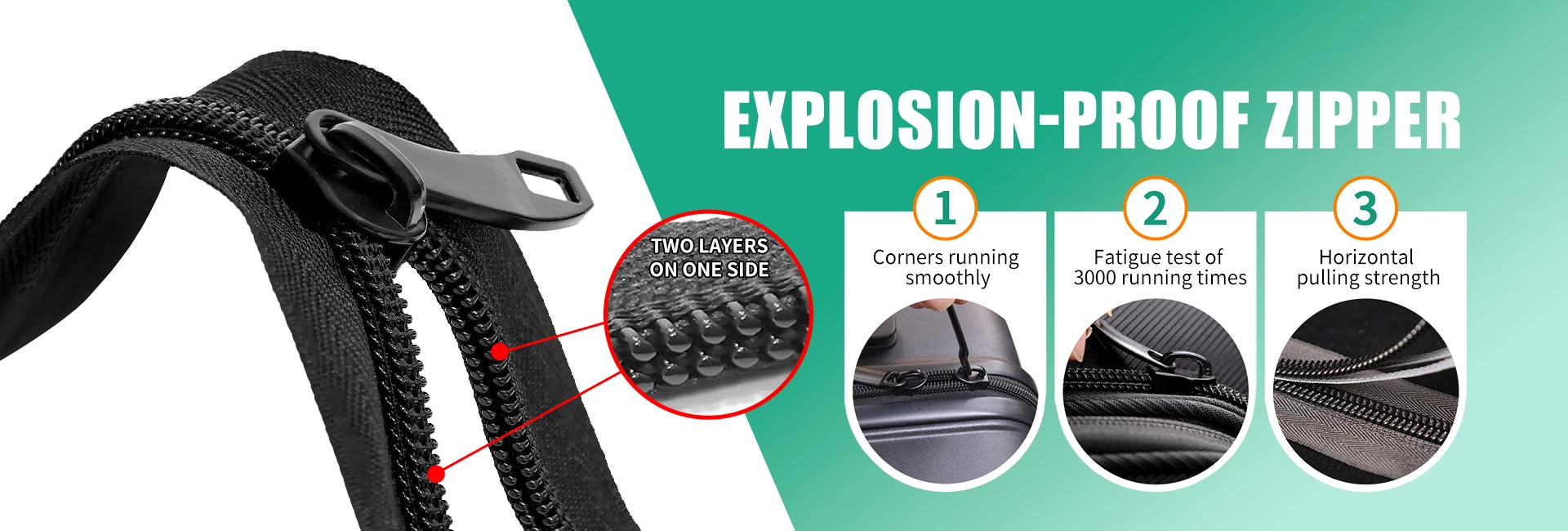
This simulates real-world usage: a machine opens and closes the zipper at a fixed speed (usually 30–60 cycles/min) and counts how many cycles it survives before failure. The zipper fails when the slider no longer engages teeth, or when the tape frays through.
| Garment zippers | ≥ 2,000 cycles |
| Luggage / bag zippers | ≥ 5,000 cycles |
| Outdoor / tent zippers | ≥ 10,000 cycles |
| Industrial / marine zippers | ≥ 20,000 cycles |
5. Dimensional Accuracy Inspection
Metal zipper teeth, tape width, and chain dimensions must stay within tight tolerances—otherwise the zipper won't fit into automated sewing machines or zipper feet. Use digital calipers (±0.02mm accuracy) to check:
- Tooth pitch: distance between adjacent teeth centers (must be uniform across the chain)
- Chain width: total width including tape (common: 24mm for #5, 30mm for #8)
- Tape thickness: typically 0.35–0.55mm for standard polyester tapes
- Slider internal cavity: must match chain dimensions precisely (±0.05mm)
6. Top/Bottom Stop Retention Strength
The tiny stops at each end of the zipper bear enormous force during use. A top stop that falls off means the slider escapes; a bottom stop that fails means the zipper splits entirely. Testing uses a specialized jig that pulls longitudinally on the stop until it detaches.
7. Surface Finish & Electroplating Adhesion Test
For electroplated metal zippers (nickel, brass, gunmetal, antique finishes), the plating must bond firmly to the substrate. Two quick field tests:
- Tape test (cross-hatch + tape pull): score a 1mm grid into the finish, apply 3M tape, rip off—<5% removal is acceptable
- Boiling water test: immerse in boiling water for 30 minutes; no blistering, peeling, or discoloration should occur
8. Color Fastness & Tape Shrinkage Test
The zipper tape (typically polyester) must maintain its color through washing, sunlight exposure, and heat. Request:
- Washing fastness: grade ≥ 4 on the AATCC gray scale after 5 home laundry cycles at 40°C
- Light fastness: grade ≥ 4 after 40 hours of Xenon arc exposure (ISO 105-B02)
- Heat shrinkage: ≤ 2% at 150°C for 30 minutes (critical if your product goes through heat-setting or ironing)
How to Request These Tests from Your Supplier
A reliable metal zipper factory should be able to provide all 8 test reports on request. When you place a bulk order, insist on a pre-shipment inspection (PSI) that includes:
- AQL 2.5 / Level II sampling from the production batch
- Tests 1–4 performed on sampled pieces (tensile, salt spray, slider pull, fatigue)
- Tests 5–8 performed on all sampled pieces (dimensional, stops, finish, tape)
- Third-party lab report for first-time suppliers (SGS, Intertek, Bureau Veritas)
Create a one-page inspection sheet with pass/fail criteria for all 8 tests. Send it with every PO. Suppliers who consistently meet your checklist become long-term partners. Those who push back on basic testing... should worry you.
At HardwareZipper.com, we supply metal zippers that pass all the above tests as standard. Every shipment includes batch-specific QC reports. Contact our team to receive sample test data for your target zipper specifications—before you commit to an order.